Category: Mortgage Process

  • Can You Really Buy a Home With No Money Down?

    Can You Really Buy a Home With No Money Down?

    The short answer is yes—but it comes with conditions. If you’ve been Googling “buy a home with no money down” at midnight, wondering if it’s actually possible or just another marketing fantasy, you’re not alone. And you deserve a straight answer.

    True zero down payment mortgage options exist in 2025, but they’re limited to specific government-backed programs. For most aspiring homeowners, the realistic path involves low down payment loans combined with assistance programs that can dramatically reduce what you pay upfront. Let’s break down what’s actually available, what it takes to qualify, and how to build a plan that works for your situation.

    Start Here: Is Buying a Home With No Money Down Actually Possible?

    Yes, you can buy a house with no money down—but only through specific programs with strict eligibility requirements. The two primary paths to a true no money down mortgage are VA loans (for eligible veterans and active duty service members) and USDA loans (for buyers in designated rural and suburban areas who meet income limits).

    Here’s the critical distinction most articles skip: “no down payment” doesn’t mean “no money out of pocket.” Even with a zero down mortgage, you’ll typically face closing costs, home inspection fees, appraisal costs, and moving costs. These can add up to 2%–5% of the home’s purchase price.

    Since 2020, home prices have climbed significantly. For many renters, saving even 3%–5% of a purchase price feels impossible while also paying rent. This is exactly why understanding your options matters. The programs exist—you just need to know which ones apply to you.

    The main paths to low or no money down:

    • VA loans: 0% down for eligible military service members
    • USDA loans: 0% down in eligible rural/suburban areas
    • FHA loans: 3.5% down with flexible credit requirements
    • Conventional 3% down: Programs like HomeReady® and Home Possible®
    • Down payment assistance programs: Grants and forgivable loans that can cover remaining costs

    Home Qualifiers’ 3-step pathway—credit optimization, down payment strategy, and pre-approval—helps turn these theoretical options into a realistic plan tailored to your specific circumstances.

    What Is a Zero-Down Mortgage?

    A zero down payment mortgage is exactly what it sounds like: 100% of the home’s purchase price is financed by the loan, meaning you don’t need to bring a traditional down payment to closing. This type of loan is also known as a no down payment mortgage, and it’s a popular alternative home financing option for buyers who want to purchase a home without a traditional down payment. The entire cost of the home (minus other expenses) is borrowed.

    However, this doesn’t mean you walk into closing with nothing. Even with 0% down, you’ll typically need cash for:

    • Earnest money deposit: Usually 1%–3% of the purchase price, held in escrow and applied to your purchase
    • Appraisal fee: Typically $400–$700
    • Home inspection: Usually $300–$500
    • Prepaid items: Property taxes, homeowners insurance, and title insurance due at closing
    • Other costs: Recording fees, attorney fees in some states

    Why lenders are cautious about zero-down loans:

    • Higher loan amount means higher risk for the lender
    • Borrowers have less “skin in the game” and higher potential to walk away
    • Market downturns can quickly put borrowers underwater (owing more than the home’s worth)

    It’s important to note that with a no down payment mortgage, you will start with less equity in your home than if you had a down payment.

    This is why most true zero-down options are government backed loans—the VA and USDA programs have federal backing that reduces lender risk.

    Quick example: On a $325,000 starter home in 2025, a zero-down VA loan would finance the entire $325,000 (plus the VA funding fee if rolled in). Your monthly mortgage payment would be higher than if you put 10% or 20% down, but you’d avoid needing $32,500–$65,000 in savings to get started.

    Types of No-Money-Down Mortgages

    As of 2025, there are two main government-backed loan programs that genuinely allow zero down: VA loans and USDA loans.

    Both are highly specific in who qualifies. VA loans require military service. USDA loans require buying in an eligible location and meeting income limits. Neither is available to every buyer—but for those who qualify, they represent the clearest path to purchasing a home with no money down.

    Even when these loans allow 0% down, your credit score, debt-to-income ratio, and steady income still determine whether you’ll actually get approved. Let’s look at each program in detail.

    VA Loans: Zero Down for Eligible Veterans and Service Members

    VA loans are mortgage loans guaranteed by the Department of Veterans Affairs, designed to help eligible veterans, active duty service members, certain National Guard and Reserve members, and some surviving spouses purchase homes. VA loans are issued by private lenders such as banks and mortgage companies, with the VA guaranteeing a portion of the loan to reduce risk for the lender.

    Core benefits of VA loans:

    • 0% down payment when the purchase price is at or below the appraised value
    • No private mortgage insurance (PMI)—this alone saves hundreds per month compared to conventional loan options
    • Often competitive interest rates
    • Reusable benefit (you can use VA loans multiple times)
    • Flexible credit requirements compared to conventional loans

    Typical lender expectations:

    • Most lenders want a minimum credit score around 580–620
    • Stable income and employment history
    • Manageable debt-to-income ratio (usually under 41%–43%)

    Understanding the VA funding fee: VA loans do not require a down payment, but most borrowers are required to pay a one-time VA funding fee. The VA doesn’t charge monthly mortgage insurance, but there is a one-time VA funding fee. In 2025, this ranges from 1.25%–3.3% of the loan amount depending on your down payment, whether you’ve used VA benefits before, and your service category. This fee can be rolled into the loan, meaning you don’t pay it out of pocket—but it does increase your total loan amount and monthly payment.

    Example: On a $350,000 home purchase with 0% down and a 2.15% funding fee (typical for first-time use with no down payment), the funding fee would be approximately $7,525. If rolled into the loan, you’d finance $357,525 total. Your estimated monthly payment would be around $2,195 (depending on interest rate), with no PMI.

    For military service members and veterans, VA loans represent the strongest payment options available—eliminating both the upfront capital barrier and the ongoing PMI expense.
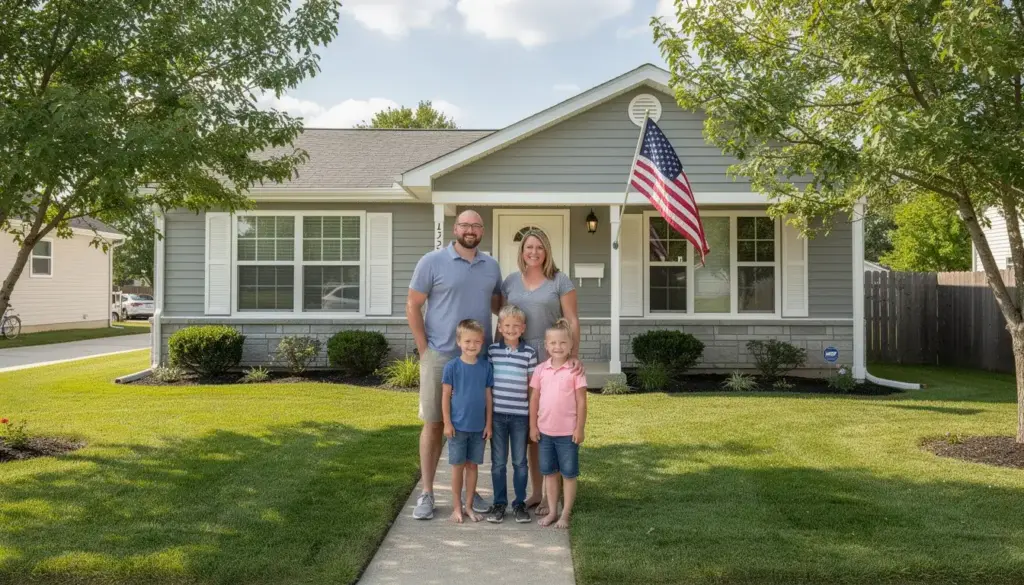
    A family stands together in front of a modest single-family home, proudly displaying an American flag. This image represents the dream of buying a home, highlighting options like zero down payment mortgages and various assistance programs available for aspiring homeowners.

    USDA Loans: Zero Down in Designated Rural and Suburban Areas

    USDA loans are backed by the United States Department of Agriculture and designed to help low income borrowers purchase homes in eligible rural and certain suburban areas. Despite the name, many qualifying areas are closer to metro regions than you might expect.

    Key features of USDA loans:

    • 0% down payment required
    • Available for primary residence only (no investment property)
    • Generally lower interest rates than conventional loans
    • Mortgage insurance premium required (both upfront and annual)

    Eligibility requirements:

    • Property must be in a USDA-eligible census tract (check USDA’s online maps)
    • Household income must be below approximately 115% of the area’s median income
    • Most lenders prefer a minimum credit score of 620 for automated approval
    • Home must be modest in size and value relative to the area

    USDA loan requirements do not include a minimum down payment or a minimum credit score, but many lenders require a score of 640 or higher.

    The mortgage insurance trade-off: Unlike VA loans, USDA loans do require mortgage insurance. There’s an upfront guarantee fee (currently 1% of the loan amount) and an annual fee (0.35% of the loan balance) that’s divided into your monthly payment. While this adds to your monthly debt payments, the base structure still delivers zero upfront capital requirement.

    Example: On a $350,000 home with a USDA loan, your estimated monthly payment would be approximately $2,010—actually lower than many other low down payment options because of USDA’s favorable terms.

    Many buyers assume they’re automatically ineligible because they live near a city. Check the USDA eligibility map before assuming—the boundaries often extend further into suburban areas than expected.

    Low Down Payment Mortgages When You Don’t Qualify for Zero-Down

    Most buyers won’t qualify for a VA or USDA loan. If military service isn’t part of your background and your target neighborhood isn’t in a USDA-eligible area, you’re in the majority. But that doesn’t mean homeownership requires 20% down.

    Low down payment loans requiring just 3%–3.5% are widely available in 2025. When combined with payment assistance programs, seller credits, and gift funds, these options can get very close to “no money out of pocket” for qualified buyers.

    The main low down payment options include:

    • Conventional 3% down: Standard conforming loans with minimum down payment
    • FHA 3.5% down: Government-insured loans with flexible credit requirements
    • Income-based programs: HomeReady®, Home Possible®, and similar options with reduced PMI

    Conventional Loans With as Little as 3% Down

    Conventional home loans backed by Fannie Mae and Freddie Mac can go as low as 3% down for many first-time homebuyers in 2025. These aren’t government loans—they’re standard conventional home loan products with specific requirements, and the minimum down payment is calculated as a percentage of the home’s purchase price.

    Typical requirements:

    • Minimum credit score around 620 (some lenders require higher)
    • Debt-to-income ratio generally under 43%–45%
    • Documented income, assets, and employment history
    • At least one borrower must be a first-time buyer for some 3% programs

    Understanding PMI: When you put less than 20% down on a conventional loan, you’ll pay private mortgage insurance. This protects the lender if you default. PMI typically costs 0.5%–1% of the loan amount annually, added to your monthly mortgage payment.

    The good news: unlike FHA’s mortgage insurance premium, conventional PMI can be removed once you reach 20% equity in your home—either through paying down your balance or home appreciation.

    Example: On a $300,000 home’s purchase price, a 3% down payment would be $9,000. With PMI of approximately $150/month added to your payment, you’d be looking at a total monthly payment around $2,100–$2,300 depending on rates and taxes.

    FHA Loans: 3.5% Down and More Flexible Credit

    FHA loans are Federal Housing Administration-insured mortgages designed specifically to help buyers with lower credit scores or limited savings.

    Baseline requirements:

    • Minimum 3.5% down with credit scores of 580 or higher
    • Possible approval with 10% down for scores between 500–579 (subject to lender overlays)
    • More flexible debt-to-income requirements than conventional loans
    • Property must meet FHA minimum standards

    The mortgage insurance trade-off: FHA loans require both an upfront mortgage insurance premium (1.75% of the loan, usually rolled into the loan) and annual mortgage insurance (0.55% of the loan balance for most borrowers). If you put less than 10% down, this insurance typically lasts for the life of the loan—you can’t remove it like conventional PMI.

    Who FHA helps most:

    • Buyers rebuilding credit after late payments, collections, or medical debt
    • Buyers with scores in the 580–650 range who might not qualify for conventional
    • Buyers who can afford the monthly payment but struggle to save a larger down payment

    Example: On a $350,000 home with FHA financing at 3.5% down ($12,250), your estimated monthly payment would be approximately $2,430, including the annual mortgage insurance premium.

    Special 3% Down Programs: HomeReady®, Home Possible®, and Similar Options

    Fannie Mae’s HomeReady® and Freddie Mac’s Home Possible® programs offer 3% down with additional benefits for qualifying buyers.

    Common criteria:

    • Borrower income typically capped at 80% of area’s median income
    • Completion of an approved homebuyer education course required
    • Owner-occupied, primary residence use
    • At least one borrower must meet income requirements

    Benefits of these programs:

    • Reduced mortgage insurance rates compared to standard conventional loans
    • Flexible sources for the down payment (gifts, grants, employer assistance)
    • Some lenders offer closing cost credits for these programs in 2025
    • Income from non-borrower household members can sometimes help qualification

    When combined with down payment assistance, these programs can achieve near-zero upfront costs. Think of them as a bridge between “I can afford the payment” and “I don’t have $15,000 sitting in savings.”

    Beyond the Down Payment: Other Upfront Costs You’ll Need to Plan For

    Even with a 0% or 3% down payment loan, you’ll face additional upfront costs at closing. Understanding “total cash to close” is more important than focusing only on the down payment.

    Common closing costs (2025 ranges): | Cost Category | Typical Range | |————–|—————| | Lender fees (origination, underwriting) | $1,500–$3,000 | | Appraisal | $400–$700 | | Title insurance and search | $1,000–$2,500 | | Prepaid taxes and insurance | $2,000–$5,000 | | Recording fees | $100–$500 | | Attorney fees (if applicable) | $500–$1,500 |

    Total closing costs typically run 2%–5% of the sales price. On a $300,000 home, that’s $6,000–$15,000 on top of any down payment.

    Example comparison:

    • 3% down on $300,000: $9,000 down + $9,000 closing costs = $18,000 cash to close
    • 0% down VA on $300,000: $0 down + $9,000 closing costs = $9,000 cash to close

    The gap between these scenarios is significant—and that’s where assistance programs, seller credits, and strategic planning come in. There are several ways to cover closing costs, including negotiating seller concessions, using lender credits, or applying for local grant programs. Seller concessions allow buyers to negotiate for the seller to cover closing costs, which usually range from 2–5% of the loan amount.

    A person is seated at a kitchen table, carefully reviewing financial documents and using a calculator, likely assessing options for buying a house with no money down. The scene suggests a focus on understanding costs such as down payments, closing costs, and potential mortgage options for aspiring homeowners.

    Understanding Monthly Payments: What to Expect After You Buy

    When you buy a house with no money down or a low down payment, your monthly payment becomes the cornerstone of your new financial life. It’s not just about qualifying for a mortgage—it’s about making sure you can comfortably afford the monthly mortgage payment and all the other expenses that come with homeownership.

    What’s included in your monthly payment?Most mortgage payments are made up of four main components, often called PITI:

    • Principal: The portion of your payment that goes toward reducing your loan amount.
    • Interest: The cost of borrowing money from your lender.
    • Taxes: Property taxes, which are often collected by your lender and paid on your behalf.
    • Insurance: Homeowners insurance, and in many cases, mortgage insurance (like FHA’s MIP or conventional PMI).

    If you’re using a VA loan or USDA loan with zero down payment, your monthly payment will reflect the fact that you’re financing the entire purchase price of the home—sometimes even including closing costs if you’ve rolled them into the loan. This means your monthly payment will be higher than if you’d made a large traditional down payment, but you’ll have kept more money in your pocket upfront.

    FHA loans with a low down payment require you to pay a mortgage insurance premium (MIP) as part of your monthly payment. This is in addition to your principal, interest, taxes, and homeowners insurance. MIP is calculated as a percentage of your loan amount and can add a significant cost each month, especially if you put less than 10% down.

    Conventional loans with a smaller down payment usually require private mortgage insurance (PMI). PMI protects the lender and is added to your monthly payment until you reach 20% equity in your home. The good news: once you’ve built up enough equity, you can request to have PMI removed, lowering your monthly payment.

    VA loans (backed by the Department of Veterans Affairs) and USDA loans (backed by the United States Department of Agriculture) are unique because they don’t require monthly mortgage insurance. However, USDA loans do have a small annual fee, and VA loans may include a one-time funding fee, which can be rolled into your loan amount.

    Don’t forget other costs:Your monthly payment isn’t the only expense to plan for. Homeownership comes with additional costs like:

    • Maintenance and repairs (budget for the unexpected)
    • Property taxes (which can increase over time)
    • Homeowners association (HOA) fees, if applicable
    • Title insurance and other costs at closing
    • Utilities and moving costs

    It’s wise to use a mortgage calculator or speak with a lender to estimate your total monthly payment based on your loan amount, interest rate, and the specific loan program you’re considering. A real estate agent can also help you understand local property taxes and other expenses in your area.

    Your credit score, income, and debt-to-income ratio will all play a role in your loan approval and the size of your monthly payment. A higher credit score can help you qualify for a lower interest rate, reducing your monthly payment and saving you thousands over the life of your loan.

    Bottom line:Buying a house with no money down or a low down payment is possible, but it’s crucial to look beyond the upfront savings and make sure your monthly payment fits your budget. Factor in all the other expenses of homeownership, and don’t hesitate to ask your lender or real estate agent for a full breakdown of costs. With the right planning, you can move from renter to homeowner with confidence—knowing exactly what to expect each month.

    Down Payment Assistance, Grants, and Other Ways to Reduce Cash Needed

    Payment assistance programs can provide grants, forgivable loans, or low-interest second mortgages to cover down payment and closing costs. These programs are often the missing piece that makes homeownership possible for buyers with limited money saved.

    Types of down payment assistance:

    • Grants: Free money that doesn’t need to be repaid (often $5,000–$25,000)
    • Forgivable second mortgages: Loans that are forgiven after a set occupancy period (typically 5–10 years)
    • Deferred payment loans: No payments required until you sell, refinance, or pay off the first mortgage
    • Low-interest second mortgages: Must be repaid, but at favorable terms

    Where to find homebuyer assistance programs:

    • State housing finance agencies (every state has one)
    • City and county programs targeting first-time buyers
    • HUD’s homebuyer assistance resources
    • Nonprofit organizations focused on affordable housing
    • Employer-sponsored housing programs

    Real examples from 2025:

    • Kentucky Housing Corporation offers loans up to $12,500 with 15-year repayment at 4.75%
    • The Chenoa Fund provides 3.5% down payment assistance through zero-interest second mortgages that forgive after 36 consecutive on-time payments
    • Louisville Metro Council approved $1.25M in down payment assistance for families under 80% of median income

    In Step Two of Home Qualifiers’ pathway (Down Payment Planning & Strategy), the 1:1 Homeownership Roadmap Call helps identify which payment assistance programs you may qualify for and how to stack them into a realistic plan.

    Other Creative Ways Buyers Reduce Upfront Cash

    • Seller concessions: Motivated sellers can agree to pay closing costs—typically up to 3%–6% of the purchase price depending on loan type. On a $300,000 home, a 3% seller concession could cover $9,000 toward closing costs.
    • Gift funds from family: Many loan programs allow all or part of the down payment to come from gift funds. You’ll need a formal gift letter confirming the money is a gift (not a loan) and documentation of the transfer.
    • Lender credits: Some lenders offer credits toward closing costs in exchange for a slightly higher interest rate. This trades monthly cost for lower cash to close—useful if you’re cash-strapped now but can handle a higher monthly payment long-term.
    • Real estate agent rebates: In some markets, buyer’s agents offer commission rebates that can be applied toward closing costs or other expenses.

    Combining one or more of these strategies with a 3%–3.5% low down payment mortgage can feel similar to “no money down” in practical terms—even when you don’t qualify for true zero-down programs.

    Credit Score and Debt: Why Approval Is About More Than Just the Down Payment

    Having enough for a down payment doesn’t guarantee loan approval. Lenders in 2025 evaluate your entire financial profile: credit score, payment history, outstanding balances, collections, and debt-to-income ratio (DTI).

    Typical credit score ranges by loan type:

    Loan TypeTypical Minimum Score
    VA Loan580–620 (lender dependent)
    USDA Loan620
    FHA Loan580 (500–579 with 10% down)
    Conventional 3% Down620+

    Understanding debt-to-income ratio (DTI): DTI is the percentage of your gross monthly income that goes toward monthly debt payments (including your projected mortgage payment). Most lenders want to see DTI under 43%–50%, depending on the loan program.

    Example: If you earn $6,000/month gross and your total monthly debts (including the new mortgage) would be $2,400, your DTI is 40%—generally acceptable for most programs.

    How credit issues affect your options: A few late payments or high credit card utilization can:

    • Disqualify you from certain programs entirely
    • Push you into a higher interest rate (costing thousands over the loan term)
    • Reduce how much you can borrow
    • Require compensating factors (larger down payment, lower DTI)

    This is where Home Qualifiers’ Step One (Credit Profile Optimization) becomes critical. Cleaning up inaccuracies on your credit report and strategically addressing negative items can unlock better programs and lower required cash. Your credit isn’t a judgment of your worth—it’s a lever that opens or closes doors.

    How Home Qualifiers Helps You Build a Low- or No-Money-Down Pathway

    Home Qualifiers exists to simplify the path from “stuck renter” to “approved buyer” through a structured 3-step system. The goal isn’t quick fixes—it’s clarity, progress, and confidence.

    Step One: Credit Profile Optimization

    Home Qualifiers uses an automated dispute engine and credit monitoring to help identify and address inaccuracies, collections, and negative items on your credit report. The goal is to strengthen your profile for VA, USDA, FHA, or conventional 3% down approval—and potentially unlock better interest rates.

    • Pull your full 3-bureau report
    • Identify items that can be disputed or resolved
    • Track progress as your profile improves
    • Understand which loan programs your score qualifies for

    Step Two: Down Payment Planning & Strategy

    A personalized 1:1 Homeownership Roadmap Call helps you:

    • Clarify your realistic budget and timeline
    • Prioritize which debts to tackle first
    • Research down payment assistance programs available in your area
    • Build a savings strategy that accounts for closing costs and reserves
    • Understand how to stack assistance programs for maximum benefit

    Step Three: Mortgage Pre-Approval

    Once your credit and down payment plan are aligned, Home Qualifiers connects you with a qualified mortgage professional who understands zero- and low-down programs. This converts preparation into actual pre-approval—the document that tells sellers you’re a serious, qualified buyers.

    The system is designed so you never have to guess the next step. Each phase builds on the previous one, moving you closer to owning your home sooner than you might think possible.
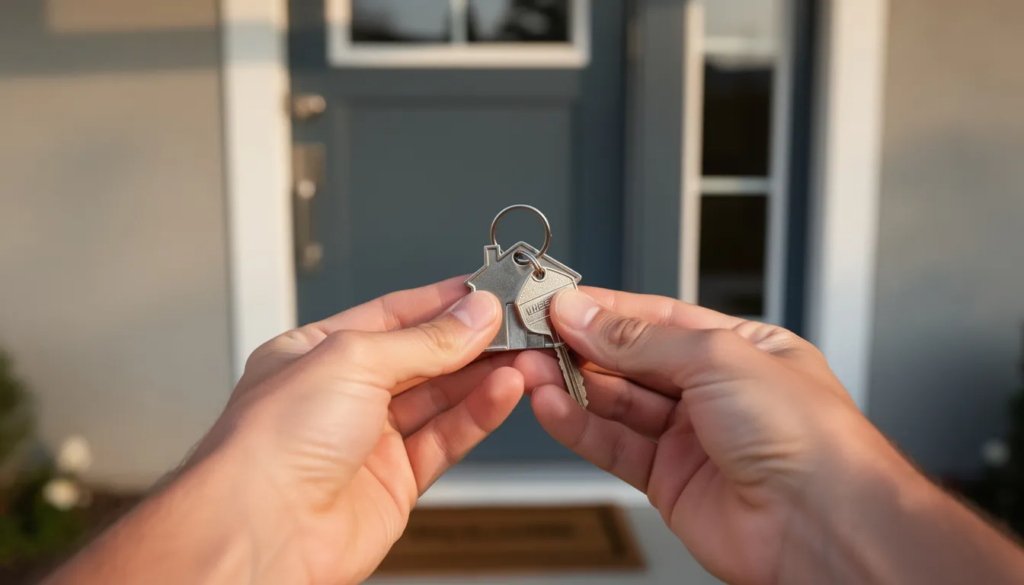
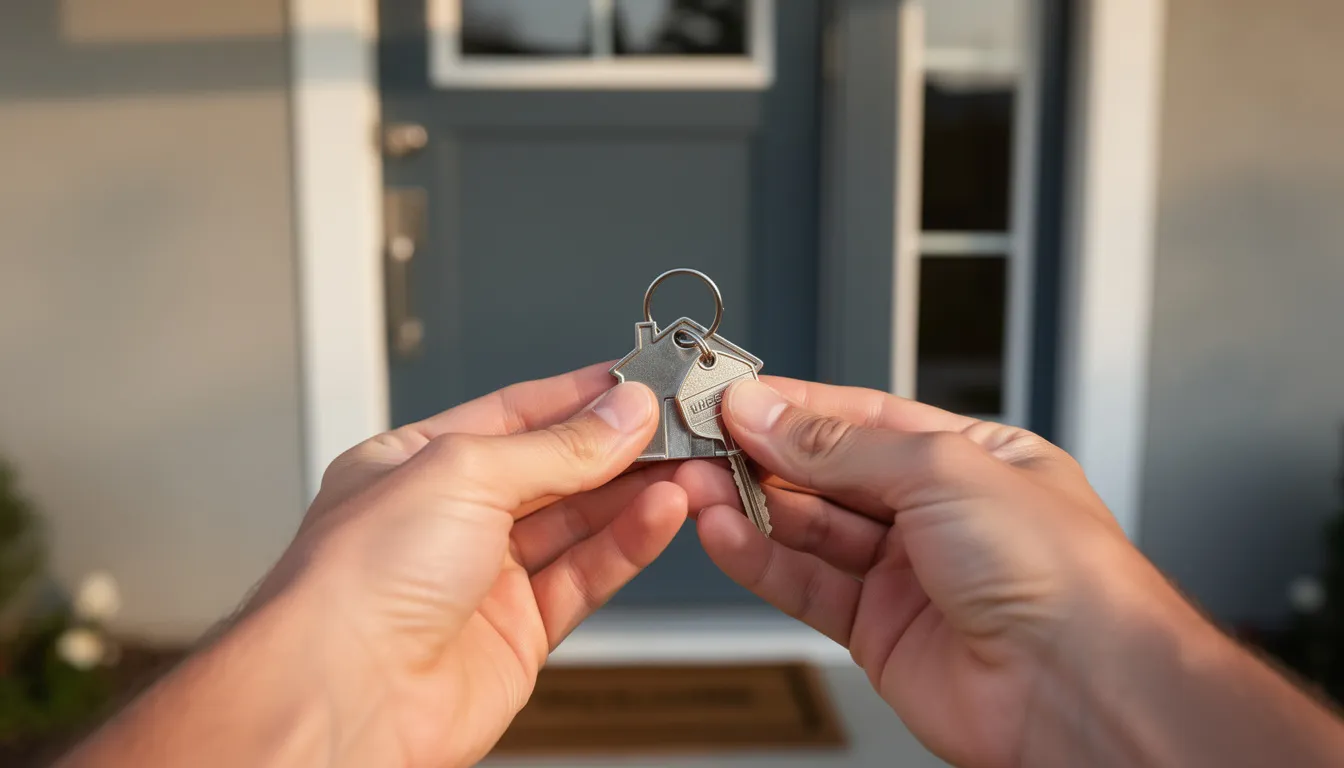
    A pair of hands holds a set of house keys, with a welcoming front door visible in the background, symbolizing the excitement of buying a home. This image captures the essence of homeownership, highlighting options like a no money down mortgage or low down payment loans for aspiring homeowners.

    Step-by-Step: What to Do Next If You Have Little or No Money Saved

    If you’re starting from scratch—renting, limited savings, maybe some credit issues—here’s a realistic roadmap to mortgage readiness:

    1. Pull your full 3-bureau credit report. Know exactly where you stand with Experian, Equifax, and TransUnion.
    2. Assess your current score and debts. Identify collections, late payments, high utilization, and other items affecting your profile.
    3. Check rough eligibility for major loan programs. VA (military service), USDA (location and income), FHA (credit flexibility), or conventional (stronger credit).
    4. Research local down payment assistance. Start with your state housing finance agency’s website and HUD’s homebuyer assistance resources.
    5. Build a 6–12 month credit and savings plan. Focus on paying down revolving debt, making all payments on time, and setting aside what you can—even if it’s small.
    6. Connect with Home Qualifiers for structured guidance. The Homeownership Roadmap Call can help you prioritize actions and identify programs you might not find on your own.
    7. Get pre-approved when credit and savings align. A pre-approval letter shows sellers you’re ready to buy.

    For many buyers, 6–18 months from “stuck renter” to “approved buyer” is a realistic timeline with a structured plan. The key is starting today, not waiting until everything feels perfect.

    FAQs About Buying a Home With Little or No Money Down

    Is it really possible to buy with no money down? Yes—through VA and USDA loans for those who qualify, and through carefully structured assistance programs that cover down payment and closing costs. However, eligibility rules are specific, and most buyers will need at least a small down payment combined with assistance.

    What credit score do I need for a zero- or low-down mortgage? VA loans typically require 580–620, USDA loans want 620+, FHA accepts 580 (or 500 with 10% down), and conventional 3% down usually requires 620+. Stronger credit means more options and lower rates.

    Can I buy if I have almost nothing saved? Possibly—assistance programs, gift funds, and seller credits can help cover upfront costs. However, maintaining a small emergency fund after closing is critical for safe homeownership. Buying with zero reserves can put you in a difficult position if unexpected repairs arise.

    Is it harder to get approved with no or low money down? Underwriting can be stricter because lenders take on more risk. Your credit profile and debt-to-income ratio become even more important when you’re putting less down. This is why optimizing your credit before applying matters.

    How long will it take me to get ready? It depends on your starting point. Buyers with decent credit and just need to save may be ready in 3–6 months. Those working on credit improvement typically need 6–18 months. Home Qualifiers exists to shorten the learning curve and keep your momentum going.

    The Bottom Line: Low or No Money Down Is Possible With a Plan

    Zero-down homeownership exists, but it’s limited to those who qualify for VA or USDA loans. For everyone else, low down payment options (3%–3.5%) combined with payment assistance programs, seller credits, and gift funds can dramatically reduce what you need to bring to closing.

    The real difference-maker isn’t discovering some secret loan program—it’s building a structured plan around your credit, your debt, your savings, and the assistance available to you. That’s what separates “maybe someday” from “here’s my timeline.”

    You’re not behind. The system is genuinely confusing, and the rules aren’t taught in school. Home Qualifiers exists to be the calm, step-by-step guide for renters who are ready to stop feeling stuck and start moving toward owning a home with no money down—or as close to it as their situation allows.


  • Down Payment for Home: How Much You Really Need (And How to Get There)

    Down Payment for Home: How Much You Really Need (And How to Get There)

    A down payment is simply the cash you bring to closing—the upfront money you put toward your home purchase before the mortgage covers the rest. In the U.S. in 2024, most buyers put down somewhere between 3% and 20% of the home price, depending on their loan type, credit profile, and financial situation.

    If you’ve been told you need 20% saved before you can even think about buying, here’s the truth: that’s not a requirement for most first-time homebuyers. Recent data shows the median first-time buyer puts down around 8–10%, and many loan programs allow 3% or even 0% down for eligible buyers. According to the National Association of Realtors, the median down payment for first-time homebuyers in 2024 was just 9%.

    At Home Qualifiers, down payment planning is Step Two in the 3-step pathway to homeownership—coming after credit profile optimization and before mortgage pre-approval. It’s not a separate puzzle piece; it’s part of a connected plan. Your down payment amount affects your loan approval, your interest rate, your monthly mortgage payment, and how quickly you build equity in your home.

    The goal isn’t to save endlessly. There are many costs involved in buying a home, including the down payment, closing costs, and other expenses. It’s to understand your real numbers, connect them to a realistic timeline, and stop guessing about what it takes to own a home.

    What Is a Down Payment on a Home?

    A down payment is the portion of the home’s purchase price you pay in cash at closing. The lender covers the remaining balance through your mortgage loan.

    Here’s how it works in simple terms:

    • You find a home listed at $350,000
    • You put 5% down ($17,500)
    • The lender finances the remaining $332,500
    • You now own the home, owe the lender, and start building equity

    That upfront payment represents your “ownership stake” from day one. Lenders require a down payment as part of their payment requirements for approving a mortgage. It shows the mortgage lender you have skin in the game—real money invested—which reduces their risk if something goes wrong.

    A few important clarifications:

    • Down payment ≠ closing costs. Closing costs are separate fees (typically 2–6% of the home’s purchase price) that cover appraisals, title insurance, lender fees, and other expenses. Closing costs typically account for 2% to 6% of the home’s purchase price.
    • Down payment ≠ earnest money. Earnest money is a smaller deposit (often 1–3%) you submit with your offer to show you’re serious. It usually credits toward your down payment at closing.
    • Down payment ≠ moving costs. Budget separately for movers, furniture, and immediate repairs.

    In Home Qualifiers’ 3-step system, Step Two focuses specifically on down payment planning and strategy—built around your actual income, debts, and savings goals, not generic advice that ignores your real life.

    How Much Do You Actually Need? (Typical Minimums by Loan Type)

    The minimum down payment required depends on your loan type, credit score, debt-to-income ratio, and the property you’re buying. But here’s good news: most first-time homebuyers can start with 0%–5% down, not the 20% you may have heard about.

    Here are typical 2024 minimums for major U.S. loan programs:

    • Conventional conforming loans: The minimum down payment for a conventional fixed-rate loan is 5%, though some programs allow as low as 3% for qualified borrowers with strong credit (typically 620+ FICO) and qualifying income.
    • FHA loans: A Federal Housing Administration (FHA) mortgage has a minimum down payment of only 3.5% with a credit score of 580 or higher; 10% down if your score falls between 500–579.
    • VA loans: VA loans, backed by the U.S. Department of Veterans Affairs, usually do not require a down payment and are available to eligible borrowers who are current or veteran military service members and some surviving spouses.
    • USDA loans: USDA loans, backed by the U.S. Department of Agriculture, also have no down payment requirement in eligible rural and some suburban areas, with income limits (typically ranging to 115% of area median income).
    • Jumbo loans: Often 5%–10%+ down, depending on the lender and loan amount (these are for homes exceeding conforming loan limits, currently $766,550 in most areas)

    Keep in mind that individual lenders can set stricter rules than program minimums. A mortgage lender in your state may require higher down payments or better credit than the baseline. Always confirm current guidelines before assuming you qualify.

    Here’s where it connects: improving your credit score through Step One (credit profile optimization) can unlock lower down payment options and more flexible loan programs. Better credit doesn’t just mean better rates—it means more choices.

    Loan-to-Value Ratio (LTV): How Your Down Payment Changes the Math

    Lenders don’t just look at your down payment in dollars—they calculate your loan-to-value ratio (LTV), which compares your loan amount to the home’s value.

    The formula is simple:

    Loan Amount ÷ Purchase Price (or Appraised Value, whichever is lower) = LTV

    For example, on a $400,000 home:

    • 20% down ($80,000) → $320,000 loan → 80% LTV
    • 10% down ($40,000) → $360,000 loan → 90% LTV
    • 5% down ($20,000) → $380,000 loan → 95% LTV
    • 3% down ($12,000) → $388,000 loan → 97% LTV

    Why does LTV matter? Lenders see lower LTV as lower risk. When you have more equity from the start, they’re more confident they can recover their money if you default. This often translates to better rates, easier approvals, and avoiding certain insurance requirements.

    Home Qualifiers helps users understand how improving credit and adjusting their down payment amount can move LTV into an approval-friendly range—without requiring years of extra saving.

    Do You Really Need 20% Down?

    Let’s address this directly: 20% down is a benchmark, not a requirement.

    The 20% figure comes from a specific benefit—avoiding private mortgage insurance on conventional loans. But it was never meant to be a barrier that keeps everyone from buying until they’ve saved for a decade.

    Recent data shows that first time home buyers typically put down around 8–10%, while repeat buyers average closer to 14–18%. The 20% down payment is the exception, not the rule.

    You generally need to put 20% down to avoid private mortgage insurance (PMI) on a conventional loan.

    When 20% down can be beneficial:

    • Avoids PMI on most conventional loans (saving $100–$300+ monthly)
    • Reduces your loan balance and monthly payments
    • Makes your offer more competitive in hot markets
    • Often required or preferred for jumbo loans

    When less than 20% makes more sense:

    • Home prices are rising faster than you can save (common in many U.S. markets since 2020)
    • You need savings for repairs, emergencies, or unexpected expenses after closing
    • You have high-interest debt (like credit cards at 20%+ APR) that’s costing more than PMI would
    • You’d rather buy your first house now and build equity instead of paying rent indefinitely

    The “right” down payment amount is personal. Home Qualifiers uses a Roadmap Call to help buyers decide whether purchasing sooner with PMI or saving longer for 20% fits their actual life—not someone else’s formula.

    Minimum Down Payment vs. Smart Down Payment

    There’s an important difference between the minimum down payment allowed and what’s actually healthy for your budget.

    Just because you can buy with 3% down doesn’t mean you should—if it leaves you with no emergency fund. Having enough money saved for a larger down payment is important, as it can lead to payment saving through lower monthly payments and better mortgage terms. Conversely, stretching to 20% down while draining every savings account isn’t wise either.

    Consider these factors beyond the down payment number:

    • Total monthly housing costs: Principal, interest, taxes, insurance, PMI, and HOA fees combined
    • Emergency savings: Can you still cover 3–6 months of essential expenses after closing?
    • Debt obligations: Will you still have room for car payments, childcare, or medical bills?
    • Home maintenance: Roofs leak, appliances break, and that’s normal homeownership

    Making a larger down payment typically results in smaller monthly mortgage payments, which can help you save more over time.

    A Home Qualifiers advisor walks through real numbers—your income, debts, current rent, and target price—to recommend a down payment range that balances buying sooner with staying financially safe.

    How Your Credit Score Impacts Your Down Payment Options

    Your credit score doesn’t just affect your interest rate—it changes which loan programs and minimum down payments you qualify for in the first place.

    Here’s how score bands typically affect your options:

    Credit Score RangeTypical Down Payment Options
    Below 580Often need 10% down for FHA; limited conventional options
    580–619Can access FHA at 3.5% down in many cases; conventional may require higher down payments or be unavailable
    620–679More conventional 3%–5% options available; better pricing than lower bands
    680+Widest choice of low-down-payment products with competitive rates

    For example, Rocket Mortgage offers flexible down payment options and lower minimum credit score requirements, making it accessible for a wider range of buyers.

    Here’s what this means practically: improving your credit by even 20–40 points can unlock a lower down payment requirement and save you thousands over the life of the loan.

    This is exactly why credit sits at Step One in the Home Qualifiers pathway. Before diving into down payment strategy, it makes sense to optimize your credit profile—removing errors, addressing negative items, and strengthening payment history. A cleaner credit profile makes Step Two (down payment planning) more flexible and realistic.

    If you’ve been denied for a mortgage before, you likely don’t need “perfect” credit to try again. You need a targeted plan to clean up specific issues and get your profile into an approval-ready range.

    A person is seated at a desk, intently reviewing financial documents alongside a laptop, which likely contains information about down payment options and monthly mortgage payments related to a home purchase. The scene suggests a focus on understanding various loan programs and costs associated with buying a house.

    Private Mortgage Insurance (PMI) and Other Mortgage Insurance

    When you put less than 20% down on a conventional loan, lenders typically require private mortgage insurance. PMI protects the lender (not you) if you default on your mortgage loan.

    How PMI works on conventional loans:

    • Usually required when LTV is above 80% (meaning you put less than 20% down)
    • Charged as a monthly fee added to your mortgage payment
    • Typically costs 0.5%–1.5% of your loan amount annually (e.g., $100–$300/month on a $250,000 loan)
    • Can be removed once you reach approximately 20% equity and meet lender guidelines

    FHA and USDA mortgage insurance works differently:

    • FHA loans: Include an upfront mortgage insurance premium (1.75% of the loan, usually rolled into the mortgage) plus annual mortgage insurance payments. With down payments under 10%, this insurance often lasts the life of the loan.
    • USDA loans: Include a 1% upfront guarantee fee plus an annual fee built into your monthly payment.

    The tradeoff is real but manageable. Paying mortgage insurance allows you to purchase with 3%–5% down instead of waiting years to reach 20%—years during which rents and home prices may continue rising. There are other benefits to homeownership, such as building equity, potential tax advantages, and stability, that can outweigh the cost of PMI for some buyers.

    Home Qualifiers helps buyers run side-by-side scenarios during the Roadmap Call: buying sooner with PMI versus saving longer for a higher down payment. Sometimes the math clearly favors one option; sometimes it depends on your priorities.

    When Paying PMI Can Actually Make Sense

    PMI isn’t always the enemy. Paying PMI can allow you to buy a home sooner, rather than waiting years to save a larger down payment. Here are situations where buying with 5% down and PMI may be smarter than waiting:

    • Rapidly rising home prices: If homes in your area are appreciating 5–7% annually, waiting two years to save more money could mean the same home costs $30,000–$50,000 more
    • Family stability needs: School district, commute time, space for kids—these matter now, not in three years
    • High rent that rivals mortgage payments: If you’re paying $2,200/month in rent while a mortgage with PMI would be $2,400, you’re not saving much by waiting—you’re just building someone else’s equity

    Remember: PMI isn’t permanent on most conventional loans. Once your equity passes 20% (through payments or home appreciation), you can often request removal. Many borrowers only pay PMI for 5–7 years, not 30.

    A balanced plan protects your emergency fund rather than draining every dollar into the down payment just to avoid PMI.

    Benefits of a Larger Down Payment (When You Can Afford It)

    Not everyone can or should aim for 20%+. But if your financial situation allows it, a larger down payment offers real advantages.

    Core benefits:

    • Smaller loan amount and lower monthly mortgage payment
    • Often better interest rates and loan terms
    • Ability to avoid PMI on conventional loans at 20% down
    • More immediate equity, which protects you if the market slows or you need to sell sooner than planned
    • Stronger offers in competitive markets where sellers prefer buyers with more cash upfront
    • Higher down payment requirements may apply for second homes or investment properties compared to primary residences.

    Simple comparison on a $350,000 home (estimated):

    Down PaymentCash at ClosingLoan AmountApprox. Monthly Payment*PMI?
    5% ($17,500)$17,500$332,500~$2,350Yes
    20% ($70,000)$70,000$280,000~$1,900No

    *Assumes 6.5% rate, 30-year term, includes estimated taxes and insurance. Your actual numbers will vary.

    That’s roughly $450/month difference—money that could go toward savings, retirement, or handling unexpected expenses.

    Home Qualifiers helps buyers identify whether stretching to a higher down payment genuinely improves their financial life or just delays homeownership unnecessarily.

    Lower Interest Rates and Better Loan Terms

    Lenders often reward larger down payments and stronger credit with lower interest rates. Their logic: you’re borrowing less, and you’ve proven financial discipline.

    A 0.25%–0.50% rate difference might sound small, but over 30 years, it can mean paying $20,000–$45,000 less interest on your home loan.

    Credit improvement (Step One) and down payment planning (Step Two) work together here. A cleaner credit profile plus a solid down payment positions you for the best pricing tier you can realistically reach.

    Smaller Monthly Payments and Less Stress

    Borrowing less (because you put more down) combined with a potentially lower interest rate means smaller monthly payments. But the benefit isn’t just mathematical.

    Smaller monthly costs mean:

    • More room in your budget for saving, travel, or family activities
    • Less anxiety about making ends meet during tight months
    • Lower risk of missed payments that could damage your credit

    Think about a monthly mortgage payment range where you can still comfortably afford life—not just survive until the next paycheck.

    Faster Equity Building and Safety Net

    Equity is simply your home’s value minus what you still owe. A bigger down payment means you start with more equity on day one.

    Why does this matter?

    • Selling flexibility: If you need to relocate, you’re less likely to owe more than the home is worth
    • Refinancing options: More equity means better refinance terms if rates drop
    • Emergency access: Home equity can become a safety tool through careful refinancing or home equity products (though this should be approached cautiously)
    • Market protection: If home prices flatten or dip, more initial equity means less risk of going “underwater”

    How to Decide Your Down Payment Amount (Without Guessing)

    There’s no magic number. The right down payment is the one that gets you approved while keeping you financially stable.

    Start by asking yourself these questions:

    • How stable is my income, and do I have 3–6 months of emergency savings?
    • How long do I expect to stay in this home (3–5 years vs. 10+ years)?
    • Do I have high-interest debt (credit cards, personal loans) that’s costing more than mortgage interest would?
    • How quickly are rents and home prices moving in my area?
    • What would my projected mortgage payment be at 3%, 5%, 10%, and 20% down?

    Some buyers are better off putting slightly less down to keep their emergency fund intact. Others might save money long-term by putting 10% down and avoiding years of PMI.

    Home Qualifiers uses each person’s credit profile, income, and target price range to map out 2–3 realistic paths. For example: “Buy in 6 months at 5% down with PMI” versus “Buy in 18 months at 10% down without PMI.” Both might be valid—the question is which fits your life.

    Balancing Down Payment, Debt, and Savings

    Here’s a principle that surprises some buyers: sometimes paying off high-interest debt makes more sense than adding money to your down payment.

    Consider this:

    • Credit card interest: 20–25% APR
    • Mortgage interest: 6–7% APR

    Paying down $5,000 in credit card debt saves you more in interest than putting that same $5,000 toward a slightly larger down payment.

    It’s also risky to empty savings just to hit a 20% target—especially for families with moderate incomes, single-income households, or anyone without a financial safety net.

    A practical approach:

    1. Decide on a minimum emergency fund (3–6 months of essential expenses)
    2. Calculate what’s left after that
    3. Determine your realistic down payment target

    In the Home Qualifiers Roadmap Call, advisors help set these guardrails so your plan feels secure, not fragile.

    The image shows a glass jar filled with coins resting on a wooden table next to a set of house keys, symbolizing the savings needed for a down payment on a home. This visual represents the financial preparation required for first-time homebuyers, including considerations for monthly mortgage payments and closing costs.

    Strategies to Save for a Down Payment (That Real People Can Actually Do)

    Saving even 3%–5% can feel overwhelming when you’re already paying rent and managing everyday costs. That’s a normal feeling—not a personal failure.

    Here are realistic strategies that work:

    Automate your savings:

    • Set up automatic transfers to a separate “home fund” savings account every payday
    • Even $200–$400 per paycheck adds up to $5,200–$10,400 per year

    Redirect windfalls:

    • Tax refunds (average ~$3,000)
    • Work bonuses
    • Side gig income
    • Gifted money from family (more on this below)

    Temporarily reduce non-essentials:

    • Downgrade streaming subscriptions ($30–$50/month saved)
    • Cut dining out frequency ($100–$200/month saved)
    • Pause gym memberships you rarely use ($40–$60/month saved)

    Set a concrete target: Instead of “save as much as possible,” try “$15,000 by June 2026.” Then break it down:

    • $15,000 ÷ 18 months = ~$833/month
    • Or ~$417 per biweekly paycheck

    Here’s encouraging news: improving your credit (Step One) can reduce your future interest rate and sometimes allow slightly lower down payments. Your savings target might be more reachable than you assume.

    Home Qualifiers ties these savings goals directly to realistic timelines so you see a clear path—not a vague “someday.”

    Down Payment Assistance Programs and Gifts

    Many buyers don’t realize help is available.

    Payment assistance programs:

    • States, cities, counties, and nonprofits offer down payment assistance through grants, forgivable loans, or low-interest loans
    • Average grant amounts hover around $7,500, though this varies widely
    • Most programs require income caps (often 80%–115% of area median income), minimum credit scores, and occupancy requirements
    • Search for programs based on your specific location—requirements differ significantly

    Family gifts:

    • Many loan programs allow gifts from family for all or part of the down payment
    • Proper documentation is required, including a “gift letter” stating the money doesn’t need to be repaid
    • Rules vary by loan type, so confirm requirements with your mortgage lender

    Home Qualifiers advisors help buyers understand how assistance programs and gifts affect their required down payment, closing costs, and approval timeline.

    How Home Qualifiers Helps You Go From Stuck to Keys-in-Hand

    Home Qualifiers operates on a 3-step pathway designed to take you from wherever you are today to actually owning a home:

    Step One: Credit Profile Optimization Identify and address negative items on your credit report, strengthen payment history, and improve scores using guided tools and monitoring. This isn’t about perfection—it’s about getting approval-ready.

    Step Two: Down Payment Planning & Strategy Create a personalized savings plan, explore payment assistance programs, and decide the right down payment target and timeline for your situation. This is where budget clarity, debt prioritization, and realistic goal-setting happen.

    Step Three: Mortgage Pre-Approval Connect with a qualified mortgage professional once your credit and down payment are aligned. Pre-approval becomes more likely to stick because you’ve done the preparation.

    Home Qualifiers is not a mortgage lender. It’s not a quick-fix credit repair shop. It’s a structured pathway that walks buyers from “I was denied” or “I’m just renting” to “I’m actually approved.”

    The goal is progress and clarity, not perfection. Even if you can’t hit 20% down, you can still build a plan that works with 3%–10% down—as long as it’s intentional and fits your budget.

    By understanding how down payments, credit, and monthly budgets work together, you can stop feeling shut out of homeownership. The path to your first house isn’t a mystery—it’s a series of steps. And now you know what they are.

    Home Qualifiers partners with lenders that are Member FDIC and adhere to fair housing standards, ensuring your deposits and transactions are secure.

    A person is walking towards the front door of a home while holding keys, symbolizing the excitement of homeownership. This moment often follows the completion of various steps like securing a mortgage loan, including considerations for down payment amounts and monthly mortgage payments.
  • The 3-Step Pathway to Homeownership (And Why Most People Get Stuck on Step One)

    The 3-Step Pathway to Homeownership (And Why Most People Get Stuck on Step One)

    Introduction: Your Real Pathway to Homeownership

    If you’ve been renting, watching prices climb, and wondering when homeownership will finally be realistic for you, this article is going to give you something different from the usual vague advice. We’re breaking down a clear, simple 3-step pathway to homeownership that actually works—not someday, but within a realistic timeline you can see and plan around.

    Here’s the truth most people don’t hear: the majority of aspiring buyers get stuck on Step One. Not because they don’t have enough income. Not because they’re “bad with money.” They get stuck because their credit profile isn’t ready, and nobody showed them how to fix that in a way that connects to actually buying a home. Federal Reserve data shows that roughly 30% of mortgage applications are denied annually due to credit issues—and first-time buyers feel this the hardest. Taking the first step is crucial for starting your pathway to homeownership and accessing programs like down payment assistance.

    Home Qualifiers exists specifically to address this. It’s not a lender. It’s not a traditional credit repair company. It’s a homeownership pathway company that guides people through three connected phases: credit profile optimization, down payment planning, and mortgage pre-approval. The goal isn’t quick fixes. It’s clarity, structure, and real progress toward keys in your hand—especially for first time buyers who are excited to become eligible and purchase their first home.

    Let’s walk through exactly how this works, starting with where most people stumble.

    The Pathway to Homeownership Program is designed to create homeownership opportunities for first-time buyers, helping you become mortgage ready as you move toward owning your home.

    Benefits for First Time Homebuyers: Unlocking Opportunities You Didn’t Know Existed

    For many first time homebuyers, the biggest challenge isn’t just finding the right house—it’s bridging the gap between dreaming of homeownership and actually affording it. That’s where the Northwest Dayton Pathway to Homeownership Program steps in, offering a suite of benefits designed to make the journey to owning your primary residence not only possible, but sustainable for the long term.

    This homeownership program is tailored specifically for buyers who may not have generational wealth or a large nest egg saved up. Through strategic partnerships with community organizations like Omega CDC and Wright-Patt Credit Union, the program provides access to down payment assistance, closing cost assistance, and payment assistance. These resources are designed to help you cover a significant portion of your purchase price and closing costs, reducing the amount you need to save and making your budget go further.

    One of the standout features of the program is its focus on closing the affordability gap. By offering down payment assistance and closing cost assistance, the program helps eligible buyers—those with household incomes at or below 120% of the area median income—overcome the financial barriers that often keep families renting year after year. Payment assistance can also help reduce your monthly mortgage loan payments, giving you greater financial flexibility as you transition into homeownership.

    But the benefits don’t stop at the closing table. The Northwest Dayton Pathway to Homeownership Program is committed to your long-term homeownership success. Through homebuyer education, ongoing support, and access to resources, the program ensures you’re not just buying a house, but building a stable financial future. Community partners provide guidance on everything from budgeting and saving to maintaining your property, so you can enjoy the benefits of owning real property for years to come.

    Eligibility for the program is straightforward. First time homebuyers must meet certain program requirements, including income limits based on area median income, credit score benchmarks, and other criteria. The application process is designed to be supportive, starting with a simple pre-qualification form and followed by a full application and a meeting with a program representative. This personalized approach ensures you understand the program’s benefits, your eligibility, and the steps needed to qualify.

    By participating in the Northwest Dayton Pathway to Homeownership Program, you’re not just accessing funds—you’re joining a community committed to helping families achieve homeownership success. The program’s resources and support are designed to help you save, qualify, and ultimately own a home that fits your needs and your budget. Whether you’re navigating the homebuying process for the first time or overcoming previous setbacks, this pathway program offers the guidance and assistance you need to make homeownership a reality.

    If you’re ready to take the next step on your homeownership journey, consider reaching out to the Northwest Dayton Pathway to Homeownership Program. With the right support, resources, and community partners by your side, you can unlock opportunities you didn’t know existed—and start building a legacy of stability and generational wealth for your family. Visit the program’s website or contact a representative today to learn more about eligibility, benefits, and how to get started.

    Step One: Credit Profile Optimization – Why This Is Where Most People Get Stuck

    When lenders evaluate your mortgage application, they’re not just glancing at a single credit score number. They’re reviewing your entire credit profile: your payment history, how much of your available credit you’re using, any derogatory marks like collections or charge-offs, and the overall mix of accounts you’ve managed. This is why two people with the same score can get very different outcomes.

    The common scenarios where buyers get stuck look like this: scores hovering between 540 and 640, old collections still reporting, late payments within the last 24 months, credit card utilization above 50%, or a recent denial that left them unsure what to do next. These situations are frustrating, but they’re also fixable.

    Here’s what typical lender thresholds look like. FHA loans often become workable starting around 580 to 600. Better terms and rates emerge around 640 to 680. Stronger rate options appear above 700. Each lender sets their own overlays, but these ranges give you a realistic target. A credit score of 580 or higher can qualify buyers for certain down payment assistance programs, and while many programs require a score of 640 or higher, some are specifically designed to assist those with lower scores.

    The critical point is this: credit is a lever, not a judgment. Improving it is about following a process—like fitness—over 6 to 12 months. It’s not about being “good” or “bad” with money. It’s about understanding what’s on your report and taking systematic action. Credit counseling is often required for participants in homeownership programs to increase their chances of becoming mortgage ready.

    Negative items like collections, charge-offs, late payments, high utilization, and excessive inquiries affect both your approval odds and your interest rate. Consider this: on a $300,000 mortgage loan, a 1% rate difference can mean roughly $200 more per month. Over 30 years, that’s over $70,000 in extra interest. A 2% rate difference? You’re looking at potentially $400 per month. This is why credit optimization isn’t optional—it’s foundational.

    Home Qualifiers uses an automated dispute and monitoring system (powered by tools like Dispute Beast technology) to help clean and optimize profiles. But this is one part of a larger homeownership plan, not the whole journey. Many readers who were denied in 2022, 2023, or 2024 can often reposition their profile for a new attempt within 6 to 12 months with structured credit optimization and better account management. Homeownership programs often provide individualized coaching and advising to help participants become mortgage ready as part of the pathway to homeownership.

    How Credit Optimization Actually Works (Beyond Generic Advice)

    There’s an important distinction between disputing incorrect or obsolete information and responsibly managing accurate debts. A legitimate optimization process never promises to “erase” valid obligations. What it does is ensure your credit report is accurate and that your profile presents you fairly to lenders.

    A good optimization process reviews several technical areas: accuracy of tradeline reporting (are account balances, payment statuses, and dates correct?), dates of first delinquency (which determine how long negative items can legally remain), current balances versus credit limits, duplicate collections (the same debt reported multiple times), and outdated negative items that should have aged off after seven years.

    Factual and compliance-based disputing means using your rights under consumer protection laws like the FCRA (Fair Credit Reporting Act) and FDCPA (Fair Debt Collection Practices Act) to challenge items that are inaccurate, unverifiable, or reported improperly. This isn’t about tricks. It’s about holding credit bureaus and data furnishers accountable to the standards they’re legally required to meet.

    An automated engine—like the underlying Dispute Beast system that powers Home Qualifiers’ Step One—can pull your 3-bureau report, analyze it, and generate tailored disputes every 30 to 40 days, without requiring you to have legal knowledge. This removes the guesswork and the hours of research most people never complete.

    Think of it as an “attack cycle” approach: review your report, send letters to bureaus and data furnishers, wait for investigations (typically around 30 days), then reassess and repeat. It’s similar to doing regular workouts rather than expecting results from a single gym session.

    Here’s a concrete example. Consider someone with three small collections from 2019 and 2020, 85% credit card utilization, and a current score of 585. Over nine months of focused effort—disputes where appropriate, lowering utilization under 30%, and consistent on-time payments—that profile could realistically move into the mid-600s and become FHA-ready. This isn’t magic. It’s a process.

    Home Qualifiers integrates this credit optimization with real-time monitoring using common scoring models like FICO 8 and Vantage 3.0. This means you see the same type of scores that lenders actually pay attention to, not some irrelevant number from a free app.

    Red Flags That Can Delay Your Mortgage Approval

    Several profile issues commonly stall mortgage approval. These include recent late payments (30, 60, or 90 days late) within the last 12 months, open collections with high balances, recent charge-offs, maxed-out credit cards, and a high debt-to-income ratio.

    DTI—debt-to-income ratio—is simply how much of your monthly gross income goes toward debt payments. If you earn $5,000 per month before taxes and have $2,000 in debt payments (including proposed housing costs), your DTI is 40%.

    Most lenders want to see total DTI stay under roughly the low-40% range for many programs, though some programs allow higher with compensating factors. High DTI can block approvals even when your score looks decent. This is why optimizing credit alone isn’t enough—you also need to consider how your debts affect your overall financial picture.

    Home Qualifiers’ Step One doesn’t just chase deletions. It helps you see which debts to tackle first to improve both your score and your DTI impact for mortgage underwriting. Strategic payoffs can move the needle faster than random payments.

    If you recognize these red flags in your own situation, don’t panic. Identifying them early is actually progress. It shows exactly what to work on before applying again—and that’s far better than another blind denial.

    Step Two: Down Payment Planning & Making the Numbers Work

    Even with a stronger credit profile, many people feel stuck at the next barrier: “I don’t have enough for a down payment.” This is where confusion and discouragement often peak, because most advice stays vague about actual dollar amounts.

    Let’s get concrete about what typical down payment ranges look like for first time buyers purchasing their first home in the U.S. FHA loans commonly require 3.5% down for those with scores at 580 or above. Conventional options for qualified first-timers can go as low as 3% to 5%. On top of the down payment, closing costs typically add roughly another 2% to 4% of the purchase price.

    For a $280,000 starter home, a 3.5% FHA down payment comes to approximately $9,800. Add closing costs of around $6,000 to $9,000, and you’re looking at roughly $16,000 to $19,000 total to close. Seeing real numbers beats wondering in the abstract.

    The Pathway DPA program offers down payment assistance for buyers with credit scores as low as 580. This program provides financial assistance that helps cover the upfront costs of buying a home, including the down payment and closing costs, making it especially valuable for first-time buyers.

    The true strategy isn’t waiting for a perfect savings situation that may never arrive. It’s combining personal savings, smart debt management, and leveraging assistance programs into one coherent plan.

    Home Qualifiers offers a 1:1 Homeownership Roadmap Call where a specialist helps you map out your realistic price range, target down payment and closing cost numbers, monthly budget tolerance, and timeline—whether that’s 6 months, 12 months, or 18 months away. This planning phase is often where anxiety transforms into a clear, written plan you can follow month by month.

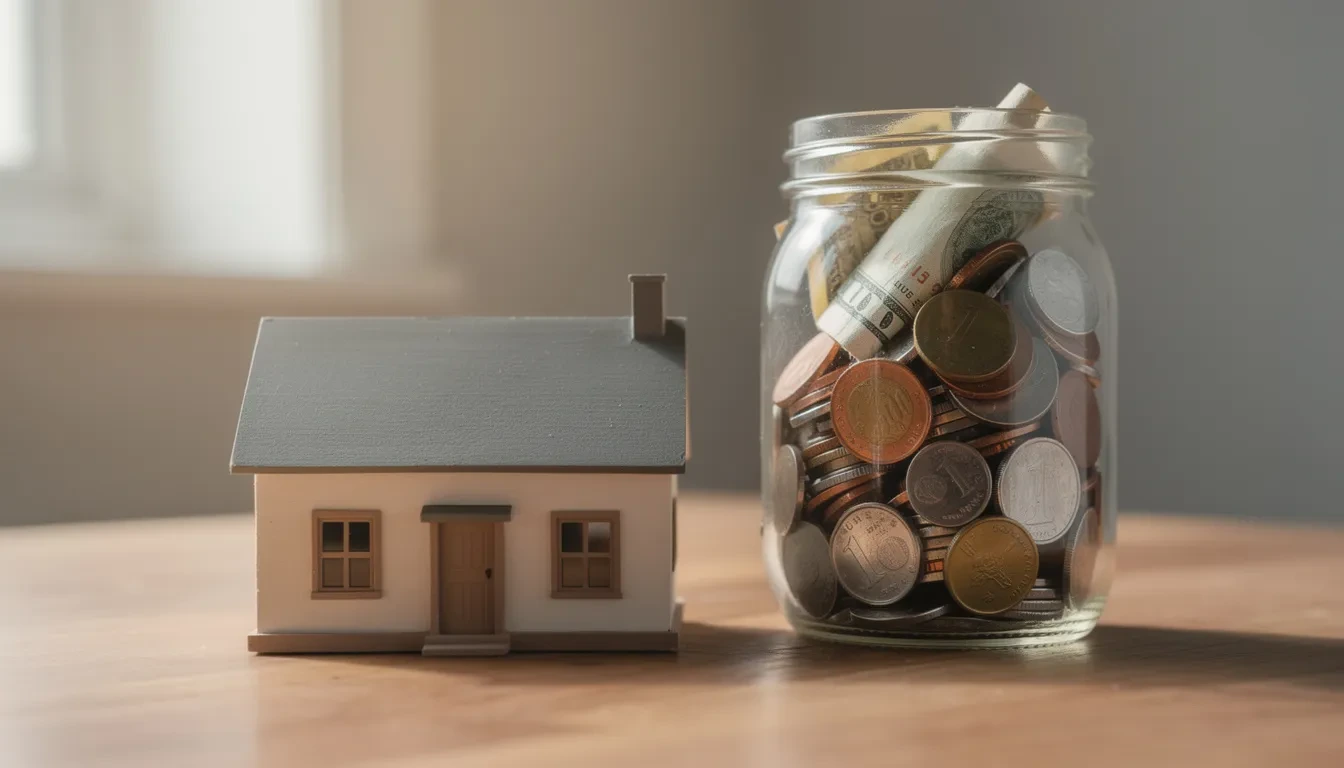
    The image features a small model house placed next to a glass jar filled with coins, symbolizing the savings and financial planning essential for first-time homebuyers on their pathway to homeownership. This visual representation highlights the importance of budgeting and saving toward closing costs and down payment assistance in achieving homeownership success.

    Budget Clarity: Turning “I Can’t” into a 6–18 Month Plan

    Many renters underestimate what they already pay in housing versus what a mortgage payment (including taxes and insurance) might actually cost. If you’ve been facing annual rent increases since 2020, you’ve already been adjusting to higher housing costs.

    Consider a family paying $1,850 in rent in 2024. Depending on local property taxes and current rates, a $260,000 to $280,000 mortgage payment—including taxes and insurance—might land in a similar range. The monthly difference may be smaller than expected, especially when you factor in building equity instead of paying a landlord.

    A guided budget review often uncovers $200 to $400 per month that can be redirected toward a dedicated “Home Fund.” Over 9 to 18 months, this accumulates into meaningful progress. For example, $300 per month for 12 months equals $3,600 toward your goal—without drastic lifestyle changes.

    Any responsible plan also includes emergency savings so you’re not “house poor” on day one. Many lenders and advisors like to see at least one to three months of mortgage payments in reserves after closing. This protects you from unexpected repairs or income disruptions.

    Home Qualifiers helps prioritize which debts to pay down first to improve DTI and free up cash flow—without leaving you cash-strapped when it’s time to close. Strategic sequencing matters more than most people realize.

    Down Payment Assistance: Finding and Fitting the Right Programs

    Down payment assistance programs (often called DPA) are grants, forgivable loans, or low-interest second mortgages from cities, states, non-profits, or even employers that help cover some or all of the down payment and possibly closing costs.

    Many DPA programs specifically target first time homebuyers, buyers below certain income limits (often under 80% to 120% of area median income), or buyers purchasing in specific neighborhoods or working in particular professions like teaching, healthcare, or public safety.

    A typical assistance structure might look like this: a grant of $5,000 to $15,000, or a forgivable second mortgage that converts to a gift if you stay in the home for 5 to 10 years, depending on local program requirements. Some homeownership programs even cover closing cost assistance separately. The Pathway DPA program is available in all states except New York due to business licensing and operational restrictions.

    Here’s how the math can work in practice. You save $4,000 over eight months. A payment assistance program adds $8,000. Now you have $12,000 total toward down payment and costs. On a $200,000 purchase with 3.5% down ($7,000) plus $5,000 in closing costs, you’re covered—and you built financial flexibility into the process.

    Home Qualifiers helps users research and evaluate which categories they might qualify for based on following criteria like income, location, and buyer status. Partnership between organizations, government agencies, and community groups is essential in creating homeownership opportunities for first-time buyers, expanding access to affordable homes and supporting community revitalization. Understanding your eligibility early affects your target price range and timeline in concrete ways.

    Planning around specific dollar amounts and actual programs replaces the vague fear of “I’ll never save enough” with a concrete checklist. That shift changes everything.

    Step Three: From Prepared to Approved – Navigating Mortgage Pre-Approval

    Once credit and down payment plans are lined up, the next step is turning preparation into actual pre-approval from a qualified lender. This is where months of work become a real number on paper.

    Pre-approval means a lender has reviewed your income, credit, debts, and sometimes assets, and issued a conditional letter stating how much they’re currently willing to lend. This isn’t a guarantee—final approval happens during underwriting after you’re under contract—but it’s far more than a guess. An appraisal ensures the home’s value matches the loan amount.

    If you refinance your first lien in the future, it may impact the repayment terms of any down payment assistance loans you received. In such cases, subordination or payoff of those secondary liens may be required.

    The core documents buyers typically need include last 30 days of pay stubs, last two years of W-2s (or tax returns for self-employed buyers), two to three months of bank statements, government ID, and documentation for any other major obligations like child support or alimony.

    There’s an important difference between pre-qualification and pre-approval. Pre-qualification is a quick, basic estimate—often based on self-reported information. Pre-approval involves actual documentation review and carries real weight with sellers and real estate agents. In competitive markets, a pre-approval letter can make your offer 72% more compelling, according to industry data.

    Common loan types first time buyers encounter include FHA (lower down payment, more flexible credit requirements), conventional (often better rates for stronger profiles), VA (for eligible veterans and service members), and USDA (for certain rural areas). Each has different benefits and trade-offs worth understanding.

    Home Qualifiers connects users—once Steps One and Two are aligned—with mortgage professionals who understand first time buyers and are experienced working with people coming off recent credit improvement. This isn’t about handing you off to a random lender. It’s about ensuring the pathway home continues with the right support.

    This is where the months of preparation pay off. You see a real number. You get a real letter. You can finally shop for a new home within a clear price range instead of guessing. Homes constructed through certain programs are sold to qualified buyers, often with support for down payment and closing costs.

    What Lenders Actually Look At (So You Can Prepare Calmly)

    Lenders evaluate several main pillars: your credit profile, income stability, debt-to-income ratio, assets for down payment and reserves, and (once you’re under contract) the property itself.

    Income stability in everyday terms means many lenders want to see at least two years in the same field or line of work, even if you’ve changed employers. Consistent income history demonstrates reliability.

    From a lender’s perspective, DTI calculation works like this: they add up your student loan payments, car payments, minimum credit card payments, and proposed mortgage payment (including taxes and insurance). If your gross monthly income is $6,000 and your total debt obligations including the new mortgage would be $2,400, your DTI is 40%.

    Here’s something important: one or two old mistakes don’t automatically disqualify you if your recent pattern shows stability and responsible behavior over the last 12 to 24 months. Lenders look at trajectory, not just history.

    A guided pathway like Home Qualifiers helps align the credit, income documentation, and savings picture before sending you to a lender. This reduces surprises and conditional approvals that fall apart later in the homebuying process.

    A couple is sitting at a desk with a professional, reviewing important documents related to their homeownership journey. They are discussing various aspects of the homebuying process, including closing costs and down payment assistance options available through community organizations.

    Why the Traditional “Figure It Out Alone” Path Leaves People Stuck

    The real problem isn’t that people lack intelligence or motivation. It’s that the system was never designed to teach them.

    Scattered advice from social media creates confusion. Random lender rejections come without clear next steps. “Quick fix” credit repair promises don’t connect to actual home-buying outcomes. Community organizations try to help, but resources are fragmented. The result is that most renters are left to learn by painful trial and error.

    The emotional cycle becomes familiar: excitement about homeownership, denial from a lender, confusion about what went wrong, shame about the credit situation, then giving up for another year while rents and prices keep climbing. This affordability gap widens every year you wait. Programs and services are available to support new homeowners after purchase, offering ongoing assistance and resources to help them succeed.

    The villain here is not you. It’s a confusing, fragmented application process that expects people to know the rules without ever being taught them. It’s rising housing costs without clear guidance. It’s expensive “experts” who don’t explain anything.

    Consider someone denied in 2023 who almost gave up. They assumed homeownership wasn’t for families like theirs. Then they found a structured pathway: six months of credit optimization, three months of budget planning with community partners who explained down payment assistance, and finally a successful pre-approval in 2025. The difference wasn’t luck. It was having a plan.

    Home Qualifiers exists to simplify this journey. It combines technology (for data, disputes, and projections) with human guidance (for planning, decisions, and encouragement). The result is homeownership success built on clarity rather than confusion.

    Participants in homeownership programs often receive individualized coaching to prepare for homeownership.

    Putting It All Together: Your Next Step on the Pathway to Homeownership

    The pathway home breaks down into three connected steps. Step One: optimize your credit profile and clean up your report so you’re approval-ready. Step Two: build a realistic down payment and closing cost plan, including assistance programs that fit your situation. Step Three: get pre-approved and shop within a clear price range with a real letter in hand.

    This journey usually takes months, not days. But having a roadmap makes each month count. Waiting transforms into progress. Saving transforms into generational wealth building. Your dream of owning a primary residence moves from abstract to achievable. The ultimate goal of this pathway is to help individuals become successful homeowners.

    Stop guessing. Start with one concrete action: get a full picture of your current credit and budget so you know which step you’re truly on. If you want a guided homeownership pathway instead of piecing things together alone, Home Qualifiers supports you from today’s reality all the way to the closing table—not just during one phase. Financial education is essential for preparing for homeownership.

    Homeownership is still possible. Even in this market. Even with your history. The path forward requires clarity, structure, and support. You don’t have to navigate it by yourself.